9 Balinese Villages Where the Old Rules Still Apply
July 27, 2026 · Miragi Team
Most of Bali's famous sights are singular objects — a temple, a waterfall, a cliff. Villages are different. What you are looking at is a working settlement organised by rules that are centuries old and still enforced, and the interest is in the organising, not any one building.
Some of these are Bali Aga — communities that predate the Majapahit influence that shaped the rest of the island and kept their own customs instead. Others are ordinary villages that happen to sit somewhere extraordinary. All of them are places where people live, so the etiquette guide is worth five minutes before you arrive.
Desa Penglipuran — Bangli
The one that turns up on "cleanest village in the world" lists, at 700 metres on the flank of Mount Batur.
The layout is the point: Penglipuran is built on the Tri Mandala principle, with uniform house compounds running up a single central lane, and it is governed by customary and formal structures side by side. Behind the village sits 45 hectares of protected bamboo forest. Try loloh cemcem (a sour herbal drink) and tipat cantok. If your timing is lucky you'll catch Ngusaba.
Desa Tenganan — Karangasem
One of the three Bali Aga villages, with Trunyan and Sembiran. These are communities that kept their ancestral social order rather than adopting the courtly Hindu structure that reshaped the rest of Bali.
In Tenganan, everything is regulated by customary law: the size and shape of buildings, the proportions of yards, the spatial arrangement of the whole settlement, where temples sit. It has held for centuries. The village sits among hills with preserved sacred forest and rice fields flanking a river.
Desa Trunyan — Bangli
The Bali Aga village on the shore of Lake Batur, known for a burial practice found almost nowhere else: the dead are laid out in the open beneath a Taru Menyan tree rather than buried or cremated.
There is a system to it. Those who died naturally with bodies intact go to Sema Wayah; others are buried at Sema Muda or Sema Bantas. The village traces its origin to a legend of four siblings following a fragrance to Mount Batur — the tree's scent is part of the story. Go respectfully; this is a cemetery, and it is in use.
Jatiluwih — Tabanan
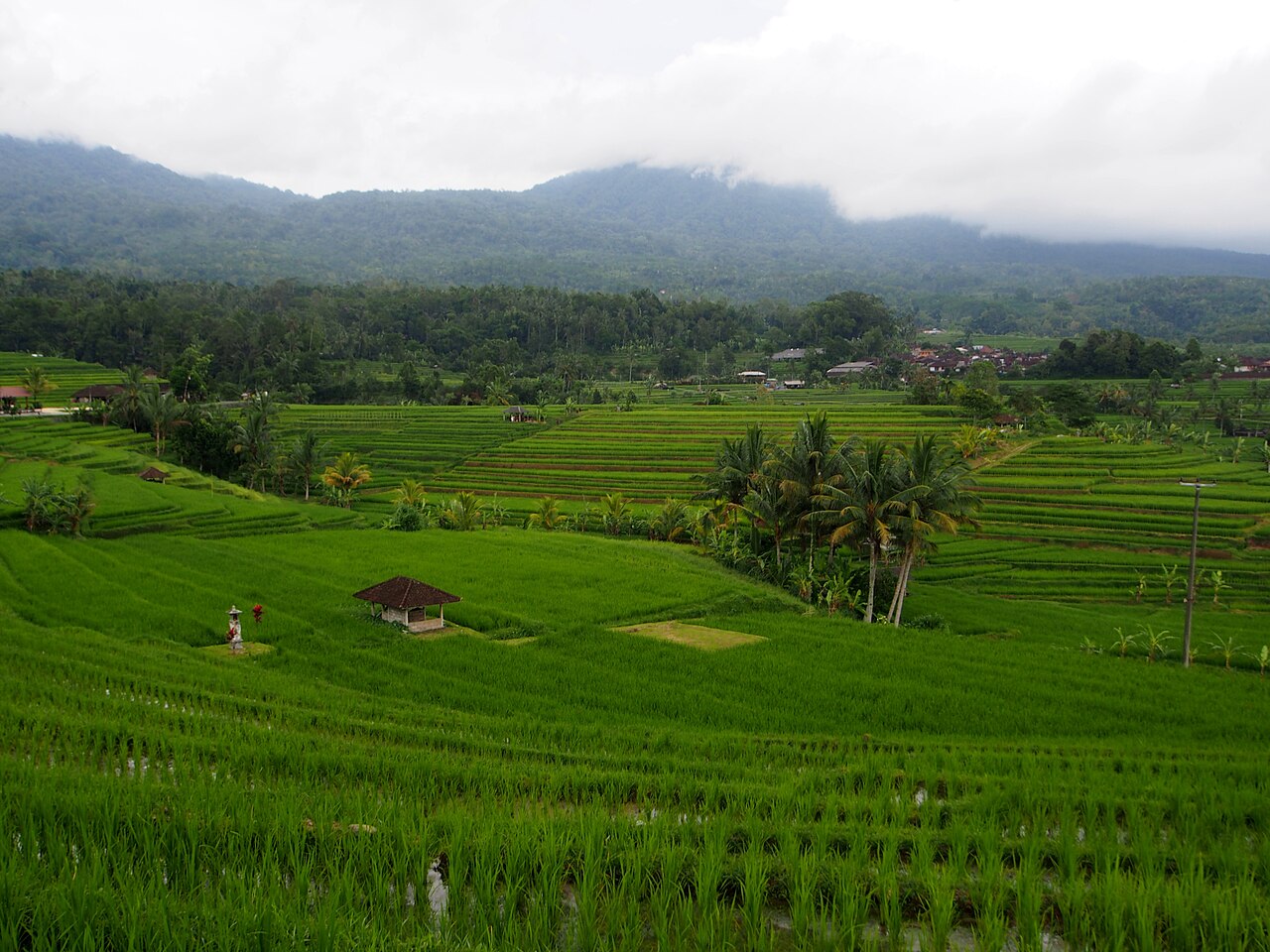
Photo: rheins — CC BY 3.0, via source
.jpg)
Recognised by UNESCO as World Cultural Heritage on 29 June 2012 — not for the view, but for Subak, the irrigation system it demonstrates.
Subak is a water-management institution run by farmers' councils under customary law, binding together agriculture, religion and mutual obligation. Every farmer's share of water is decided collectively and ratified at a water temple. Jatiluwih offers agricultural tours and trekking, and its red rice — and red rice tea — are local specialities.
Desa Munduk — Buleleng
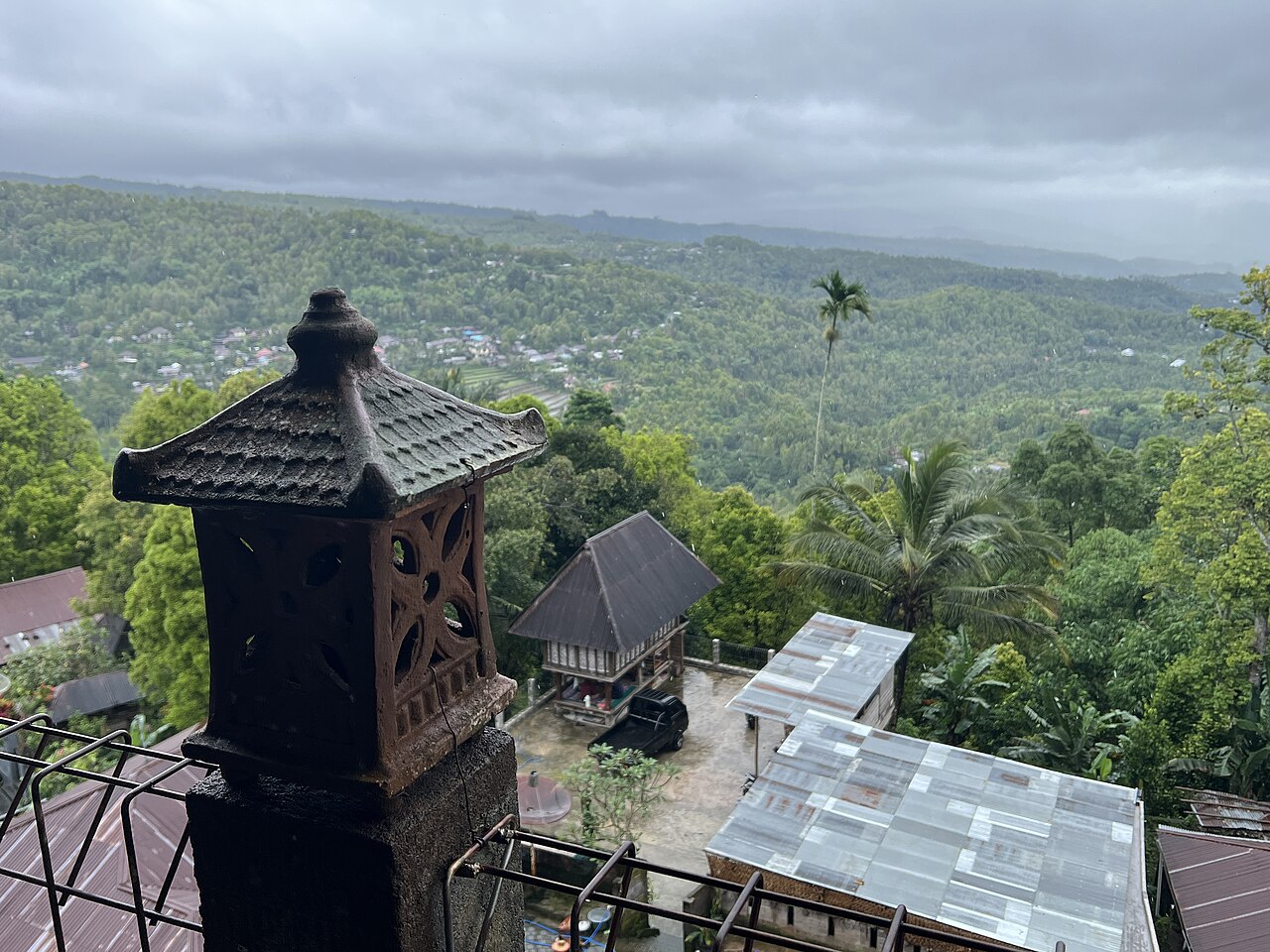
Photo: Mike Dickison — CC BY 4.0, via source

Between 600 and 1,500 metres, averaging around 22°C, on volcanic soil that grows coffee, cloves, vanilla and cocoa.
The Dutch developed it as coffee country, and it still is: "Blue Tamblingan" coffee grows around the Tamblingan forest. Four waterfalls are walkable from the village, which makes Munduk one of the few places you can base yourself for several days without moving the car.
Desa Pinggan — Bangli
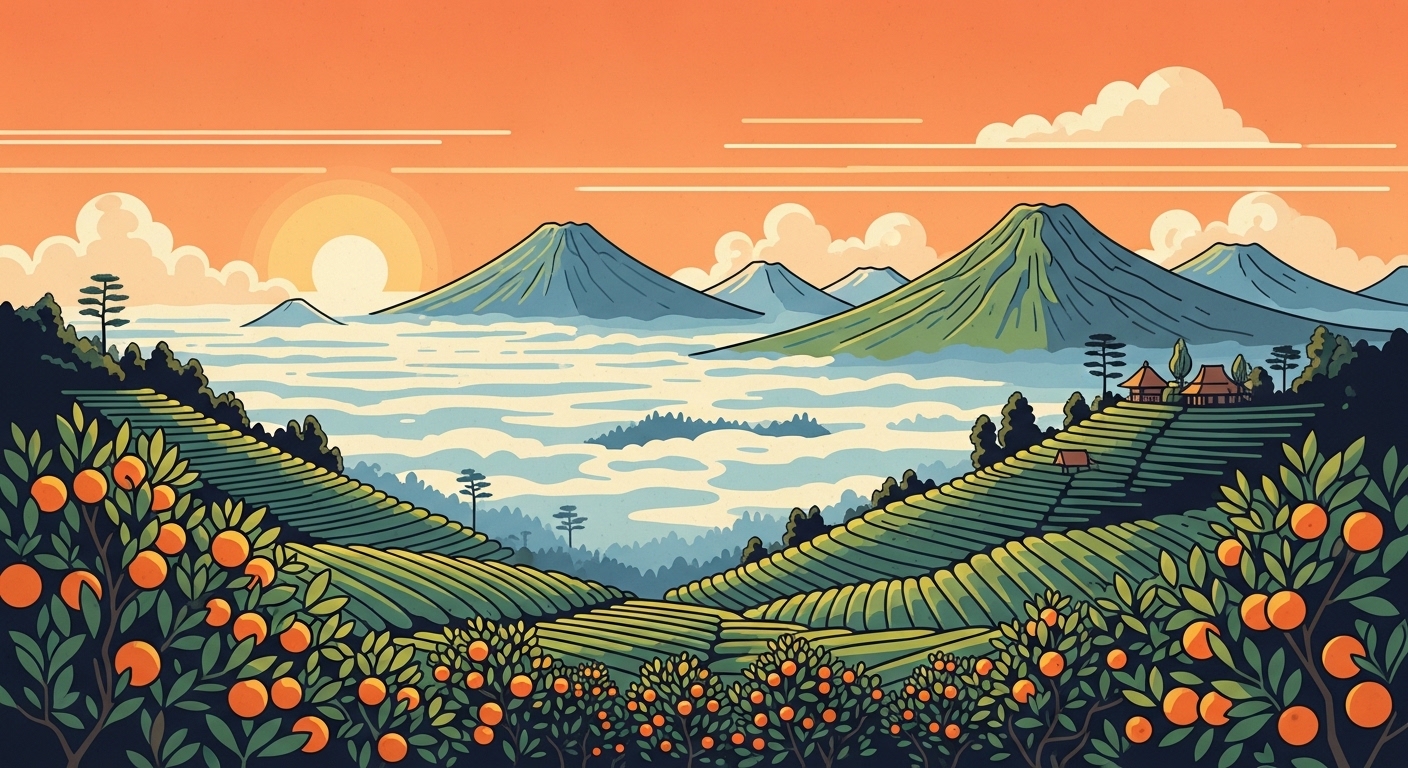
Illustration: Miragi
"The land above the clouds" — about 1,300 metres in Kintamani, where morning mist pools in the valleys below and Mount Batur rises out of it.
It has become the alternative to the Batur summit trek for sunrise: several east-facing viewpoints along the approach road, no hike required. The name traces to Ping An, Chinese for "peace," from the story of King Jayapangus and Kang Cing Wie, honoured at Pura Dalem Balingkang. Bring a jacket — mornings and evenings are genuinely cold — and consider staying the night.
Campuhan Ridge Walk — Gianyar
Two kilometres of ridge trail about a kilometre from central Ubud: green hills, valleys, rice fields, and an easy grade suitable for any age.
Campuhan refers to the confluence of two rivers at the foot of the hill — a meeting of waters, which in Balinese terms is a spiritually significant thing rather than a geographic accident. Warungs and cafés along the way. Best walked early, before the heat.
Desa Sangkaragung — Jembrana
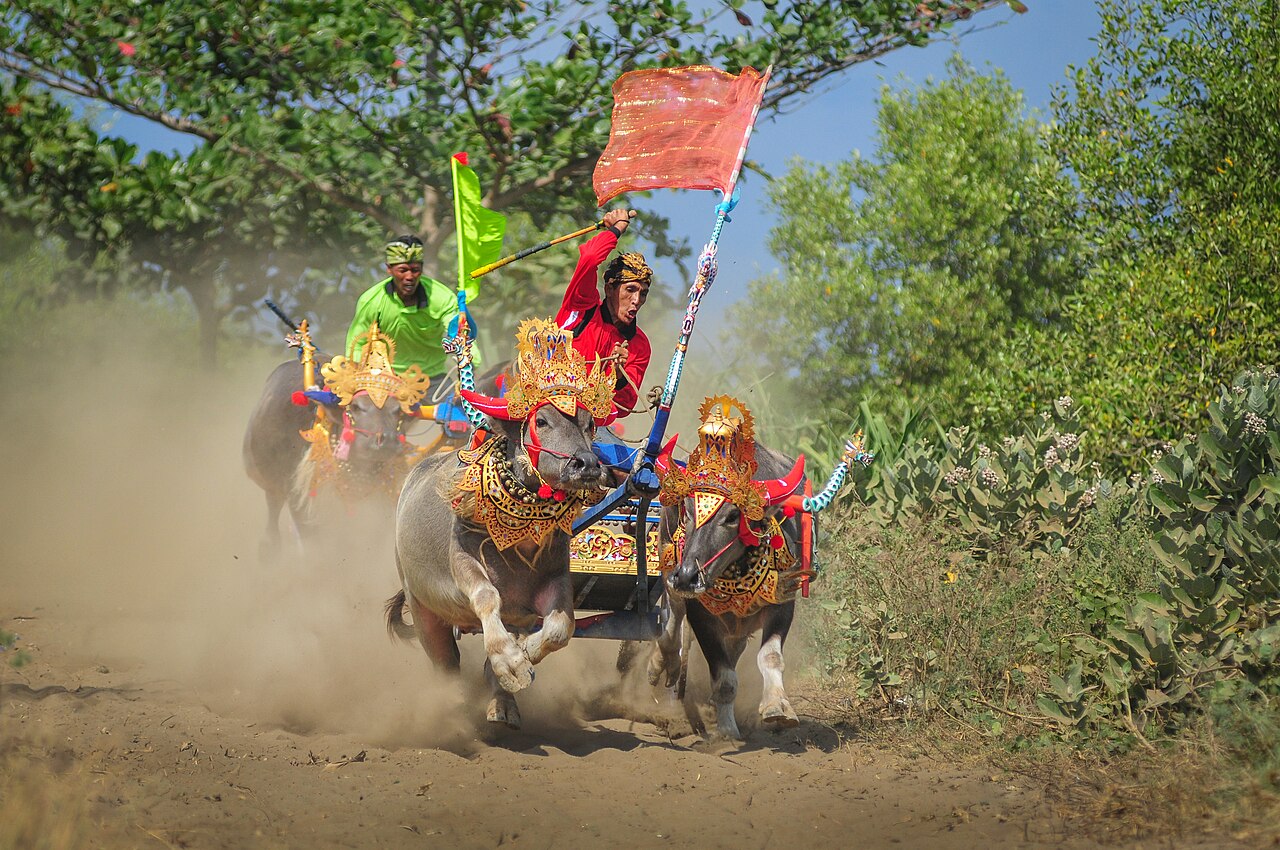
Photo: Imadedana — CC BY-SA 4.0, via source

In West Bali, and known for jegog — gamelan built from giant bamboo, producing tones far deeper than the bronze gamelan most visitors hear in Ubud.
Performances combine music, dance and song, usually around festivals and ceremonies. The setting is rice fields and slow rivers, and the appeal is that almost no tourists make it this far west.
Pulau Menjangan — Buleleng
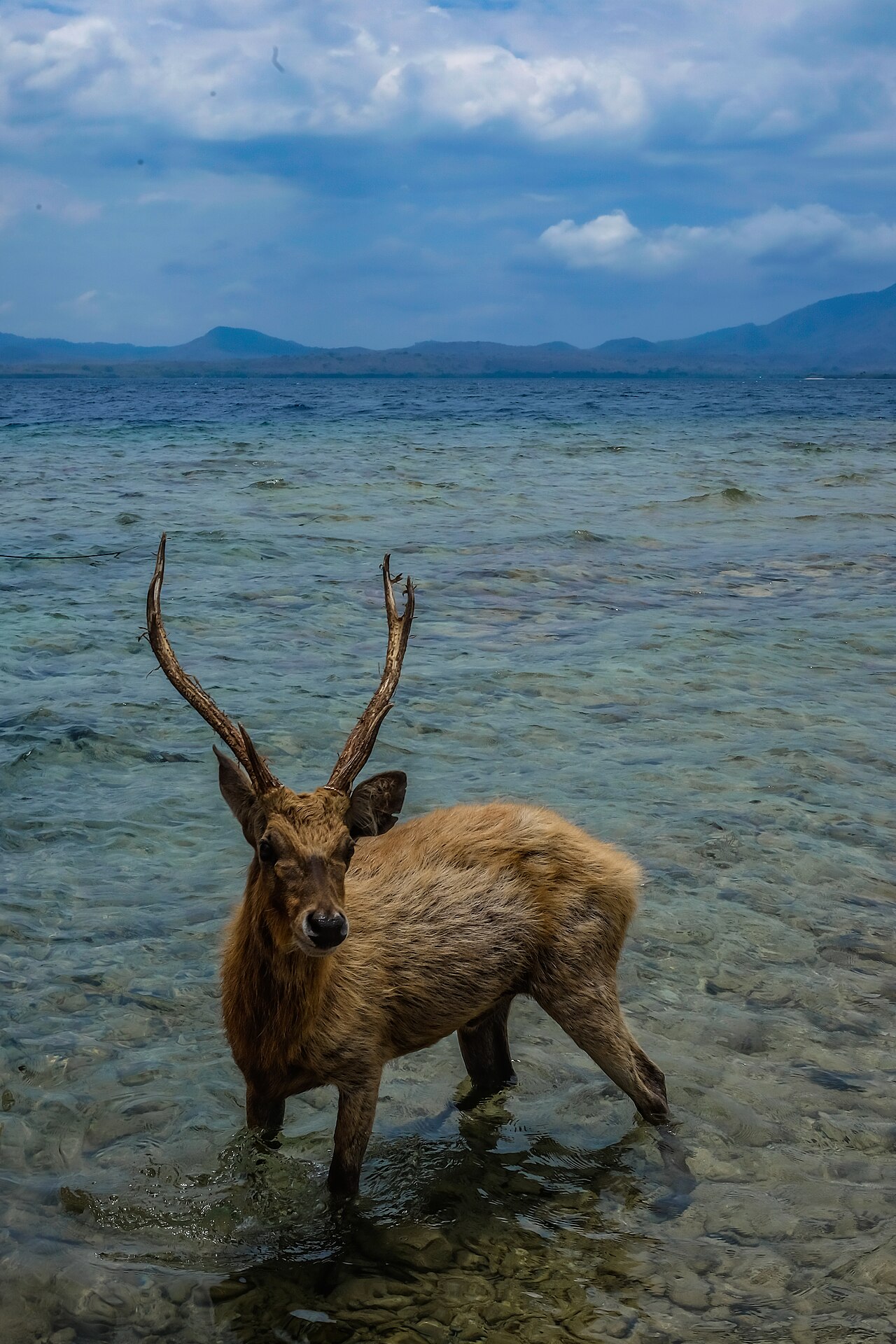
Photo: Syselpunk — CC BY-SA 4.0, via source

Uninhabited, part of West Bali National Park, named for the wild deer that live there.
The draw is underwater: exceptional visibility, vertical coral wall formations, and the Anker Wreck, an old shipwreck that is one of Bali's best dives. Access is by motorboat from Labuan Lalang or Banyuwedang, and you must be accompanied by an official park guide — a rule that exists to keep the reef intact.
Why villages reward context more than photographs
A row of identical house gates is architecture until you know it is Tri Mandala. An open-air cemetery is macabre until you know which dead go where and why. The information is the experience.
Miragi has narrated audio guides for each of these villages, playing as you walk through them — over 200 sites across Bali. For the structure underneath all of it, the Desa Adat guide explains how a Balinese village actually governs itself, and the Banjar guide covers the neighbourhood councils that do the day-to-day work.