10 Cultural Sites in Bali That Aren't Temples
July 27, 2026 · Miragi Team
Bali's culture doesn't live only in its temples. It's in a rice-terrace system run by farmers' councils, in palm-leaf manuscripts that hold everything from medicine to calendars, in art markets that started as places for carvers with no stall, and in a monument shaped like a priest's bell.
These ten sites cover history, craft, and a couple of genuine oddities. They're spread across the island, so read them as a menu rather than an itinerary.
Goa Gajah — Gianyar
The "Elephant Cave" in Bedulu, an 11th-century temple and hermitage complex, and one of the clearest places to see Hinduism and Buddhism sitting together: Shaivite relics in the northern area, Buddhist in the southern.
The cave entrance is carved as a giant face, mouth as doorway, surrounded by dense ornament. Inside, a T-shaped passage 13.5 metres long holds statues of Ganesha, the Trilingga, and Hariti — a figure who began as a child-devouring demon in Buddhist tradition and was converted into a protector of children.
Tegalalang Rice Terrace — Gianyar
The most photographed terraces on the island, and worth understanding rather than just shooting. The contours are engineering: a solution to farming steep ground, fed by subak, the traditional irrigation system UNESCO recognises as Intangible Cultural Heritage.
Subak embodies Tri Hita Karana — harmony between people, nature, and the divine — which is not decoration but the actual basis on which water gets allocated. The colour changes with the planting cycle, from green to gold at harvest.
Belimbing Rice Terrace — Tabanan
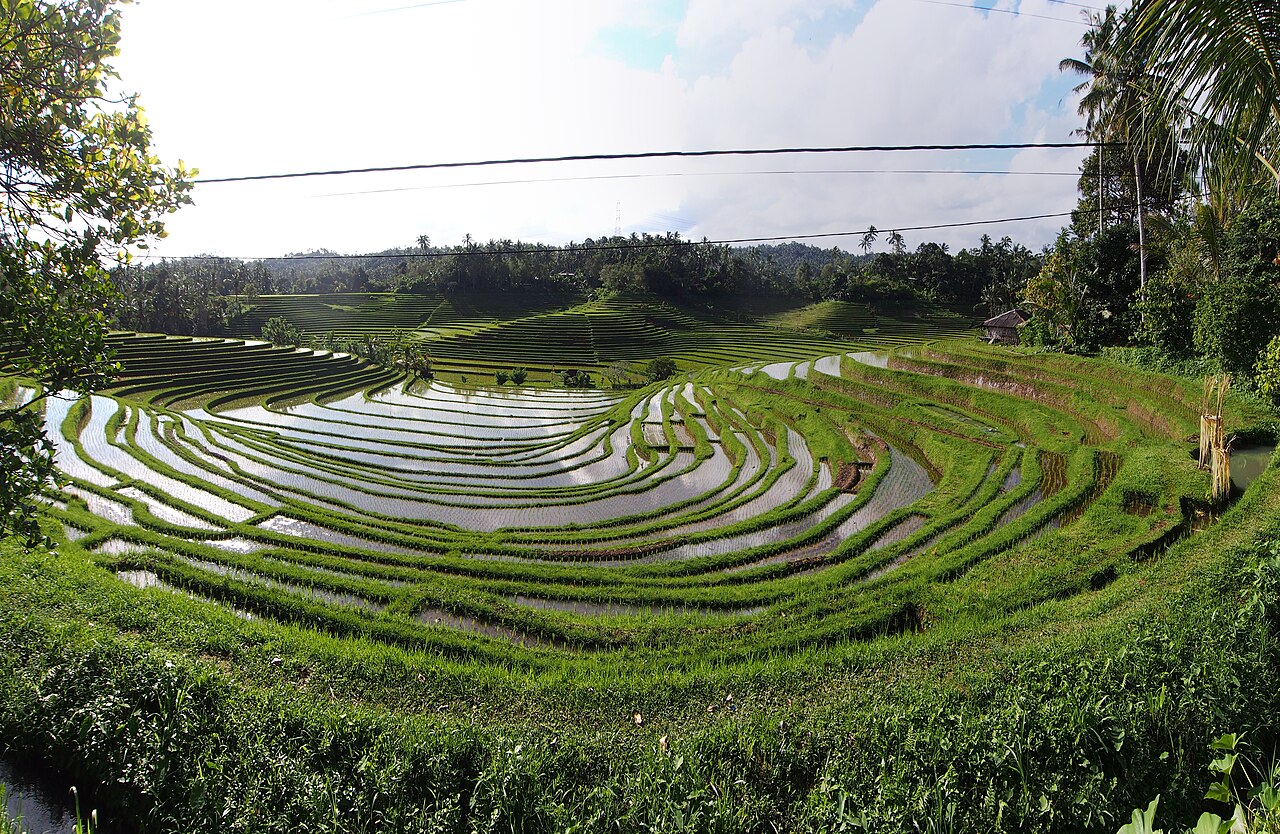
Photo: rheins — CC BY 3.0, via source

The same system, without the crowds. In Belimbing Village, Pupuan, terraces run out against Mount Batukaru, managed by subak.
The difference is that you can walk into it. Trekking, cycling, homestays, and enough local life going on that visiting feels like being somewhere rather than photographing it.
Museum Bali — Denpasar
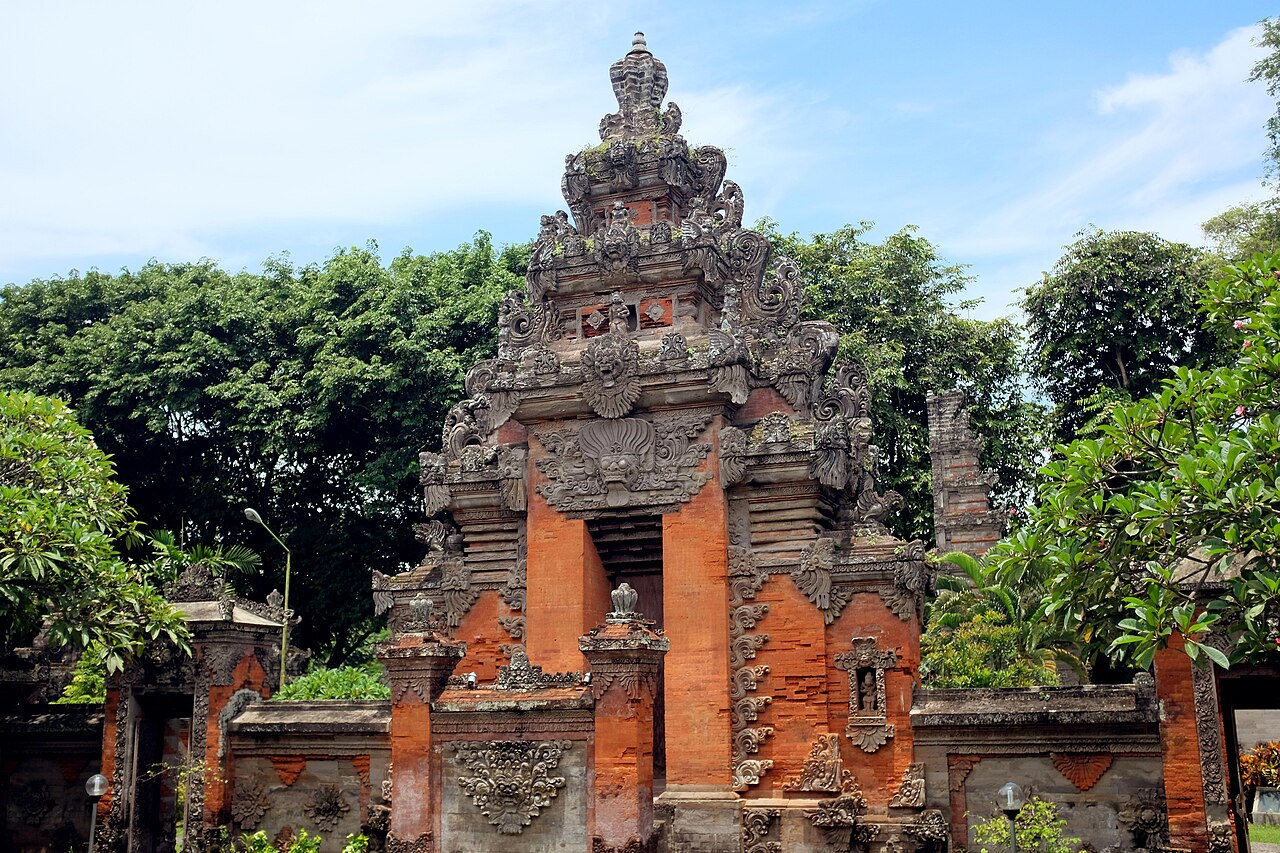
Photo: Jnzl's Photos — CC BY 2.0, via source

The island's oldest museum, opened 1932, built on the initiative of the Dutch official W. F. J. Kroon with support from Balinese kings, artists and traditional architects. The building itself follows tri mandala.
Over 10,000 artefacts: prehistoric stone tools, sacred barong and rangda masks, lontar manuscripts, royal textiles, ceremonial objects. If you're going to see one thing before travelling the rest of the island, this is a strong candidate — it gives you the vocabulary for everything else.
Museum Pustaka Lontar — Karangasem
In Dukuh Penaban village, about 1 hour 50 minutes from Denpasar. Thousands of lontar — palm-leaf manuscripts holding Balinese knowledge: medicine, ritual, literature, calendars, law.
It was founded in 2017 by I Nengah Suarya, specifically because younger Balinese were losing interest in the lontar tradition. It was built through gotong royong — communal labour — and is run by the village, on 1.5 hectares in "Bali mula" style. That origin story is a large part of why it's worth the drive.
Monumen Bajra Sandhi — Denpasar
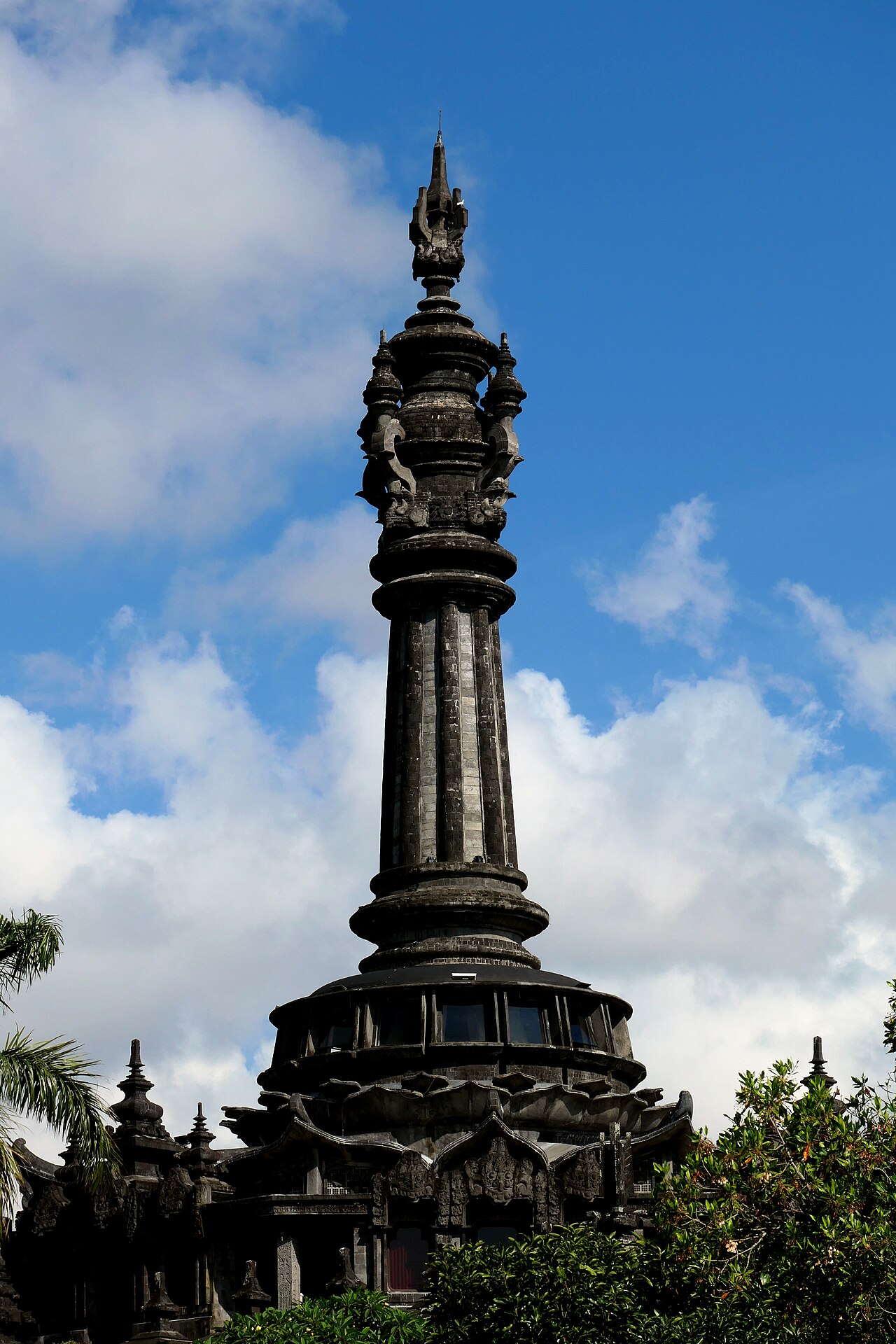
Photo: Anandajoti — CC BY-SA 4.0, via source

In the middle of Denpasar, shaped like a priest's bell (bajra) and dense with Hindu symbolism. Inside are 33 dioramas walking through Balinese history from prehistory to independence.
Climb it for a 360° view over the city. It's the best single primer on how Bali sees its own past — particularly the resistance to Dutch rule, which shapes how a lot of the island's history gets told.
Goa Gala-Gala — Nusa Lembongan
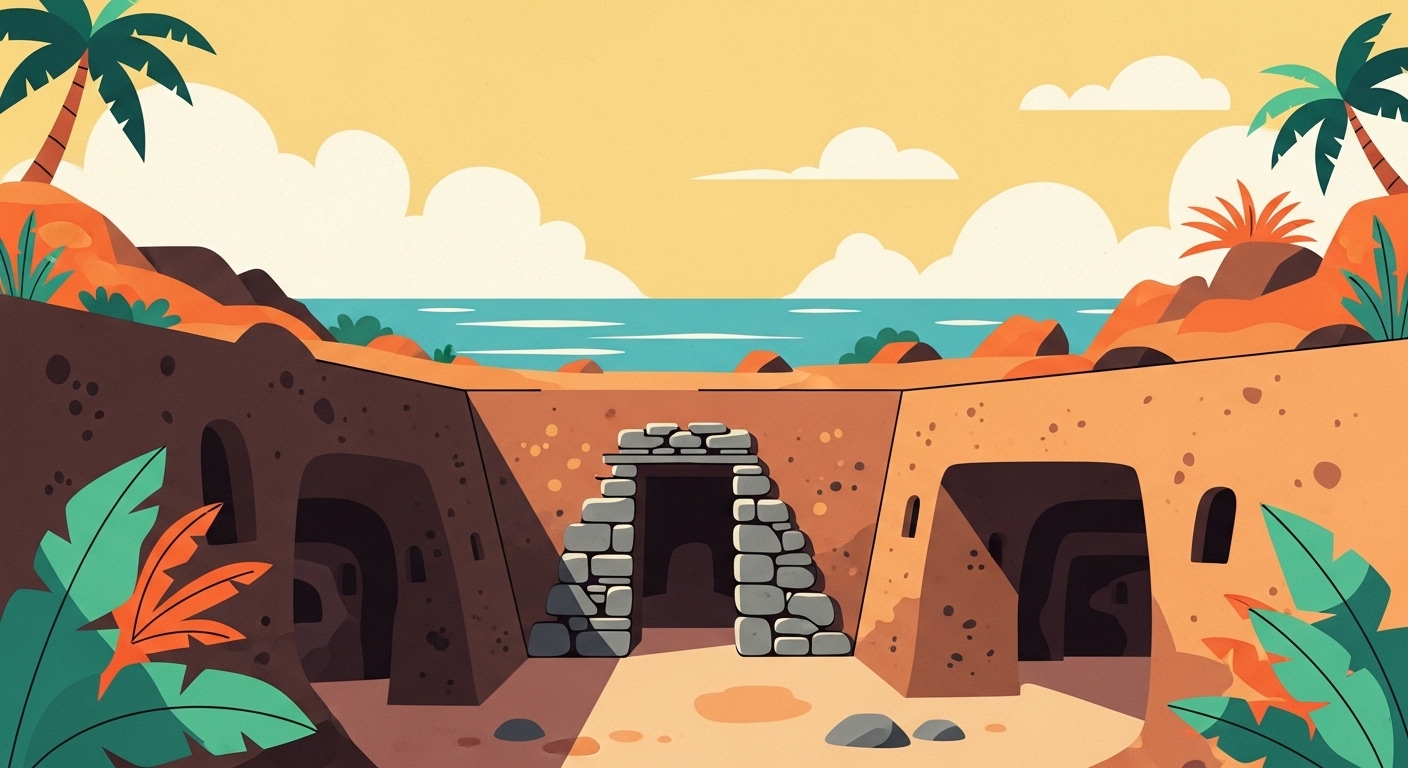
Illustration: Miragi
An underground house, dug by one man with a crowbar over fifteen years, 1961 to 1976. Made Byasa was a puppeteer and hermit, and he took his design from the Pandavas' hidden refuge in the Mahabharata.
Around 500 square metres: living room, two bedrooms, bathroom, two kitchens, a well, seven entrances and three ventilation shafts. Passages are narrow and low — you'll be stooping. His descendants run it now.
Pasar Seni Sukawati — Gianyar
The classic Bali handicraft market, formally opened on 25 May 1985 by Governor Ida Bagus Mantra, though it had been running since the early 1980s.
It began as somewhere for statue carvers with no permanent stall to sell from, backed by the village and local government. That is still roughly what it is, at much larger scale. Prices are negotiable — the money guide covers haggling norms if you'd rather not guess.
Pasar Seni Ubud — Gianyar
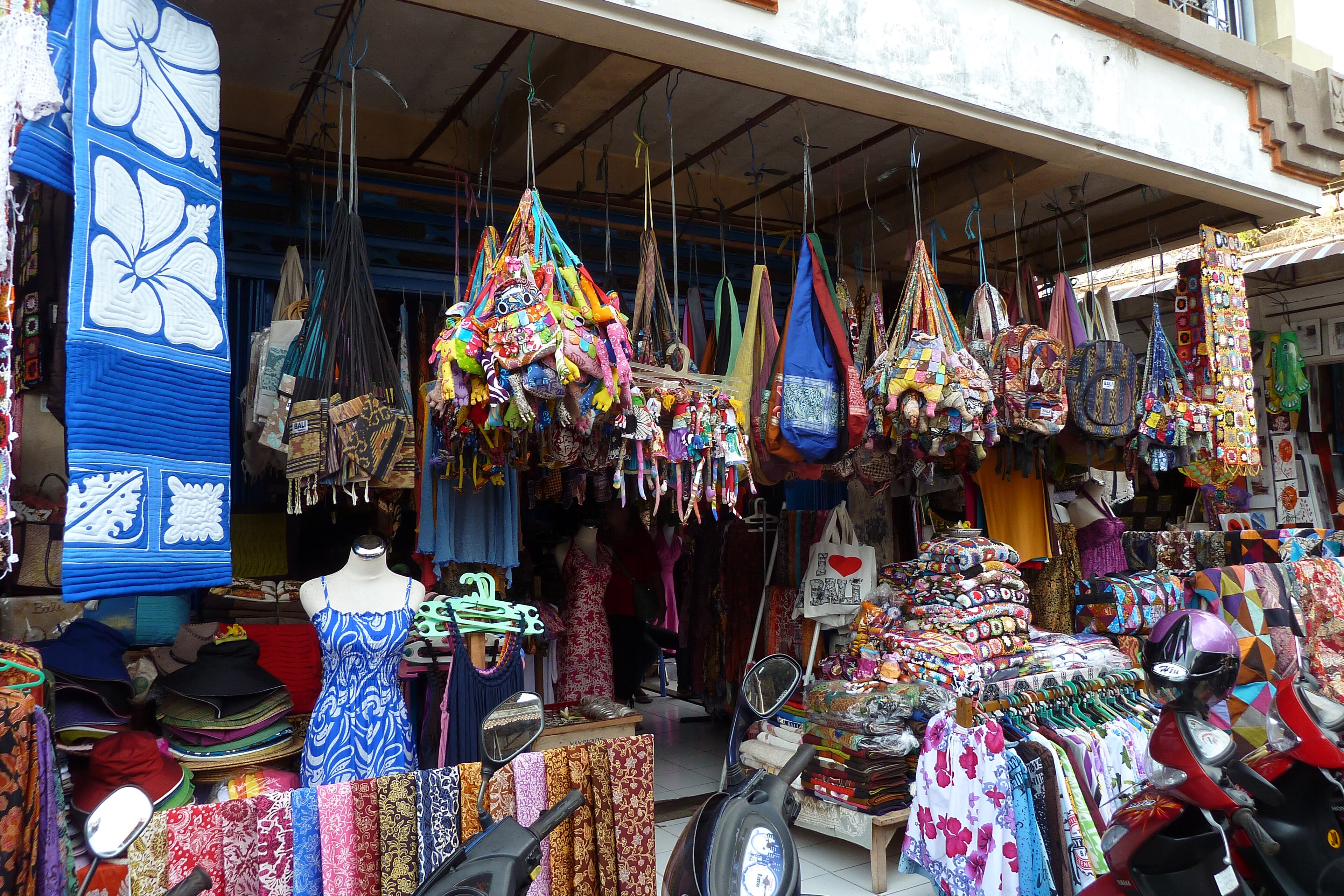
Photo: Schnobby — CC BY-SA 3.0, via source

On Jalan Raya Ubud, in the centre of town. Once open only every three days on the traditional market cycle; now daily.
What makes it interesting is the shift it represents: artists here began selling paintings and carvings that had originally been made only for ceremonies. The market is where Balinese ritual art became Balinese art for sale — a transition you can still see in the stock.
Bunut Bolong — Jembrana
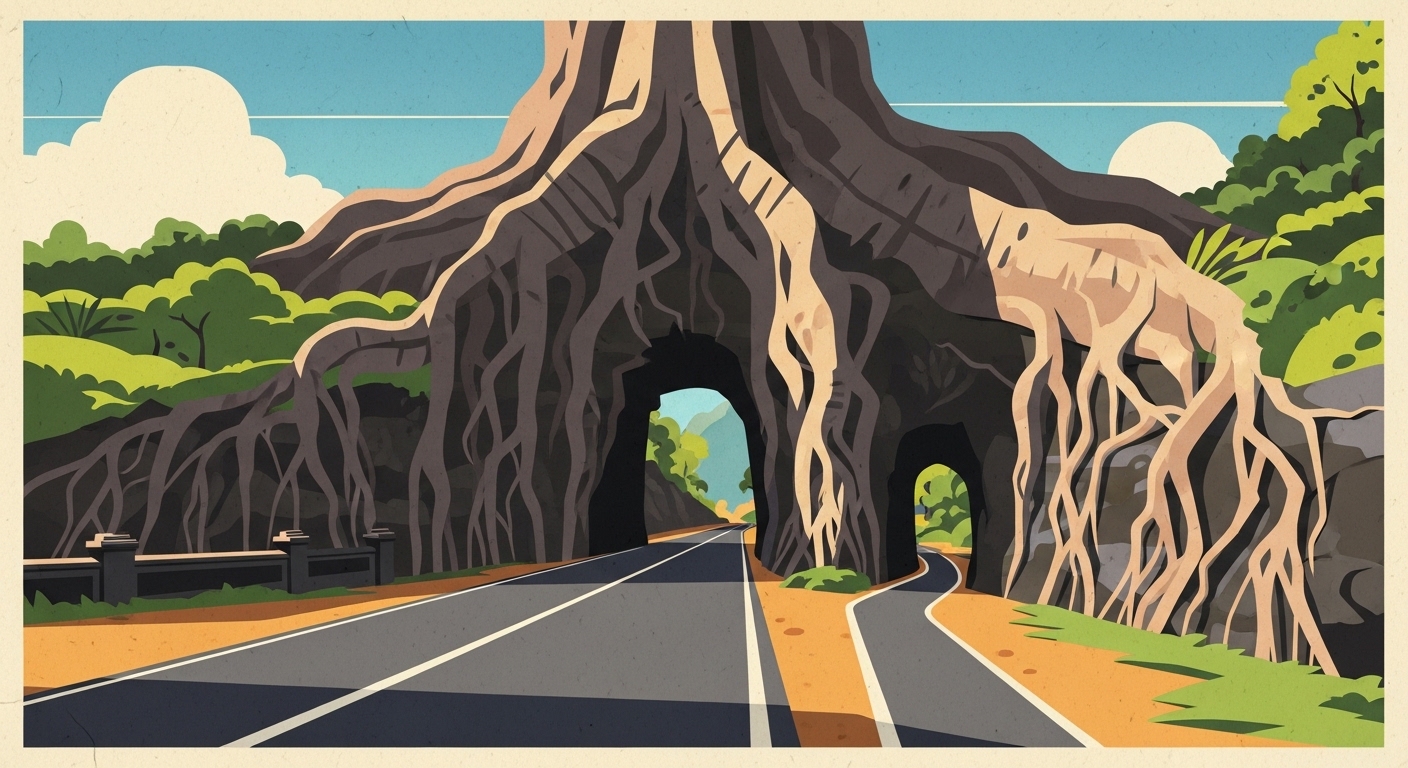
Illustration: Miragi
A banyan tree in Manggissari Village with a hole through its trunk wide enough to drive a bus through. The road goes through the tree.
It's several hundred years old and treated as sacred. Pura Pujangga Sakti stands beside it, dedicated to Empu Dhang Hyang Sidhi Mantra, and local tradition holds the opening was formed at that priest's spiritual command. About 86 km from Denpasar, which puts it firmly in West Bali territory.
Getting more out of these
Most of these sites have minimal signage, and what exists is often only in Indonesian. A carved face over a cave mouth means something specific; so does a bell-shaped monument; so does the placement of a rice terrace's water temple.
Miragi covers all of them with narrated audio guides that play while you're there — over 200 sites across Bali. For deeper background, the Balinese calendar guide explains the ritual cycle these places run on, and the Merajan guide covers the family shrines you'll see in every compound you pass.