8 Bali Waterfalls, Ranked by How Many Steps You'll Regret
July 27, 2026 · Miragi Team
Almost every Bali waterfall involves a staircase. The question nobody answers before you set off is how many steps, and whether what's at the bottom justifies climbing back up in the heat.
So here are eight, with the real numbers. They range from 847 steps in a West Bali clove plantation to a 15-minute stroll in Gianyar. Bring shoes with grip — most of these trails are wet limestone or mud, and "slippery" is doing a lot of work in the official descriptions.
Sekumpul — Buleleng · ~350 steps
The one people mean when they say Bali has a great waterfall. Often called "Bali's Niagara," though what it actually is is a cluster: around seven falls in one amphitheatre, including two main ones fed by the Sekumpul River plus a natural spring.
The descent is about 350 steps and a small river crossing. The setting — dense forest, terraced rice fields, water on several sides at once — is why it tops most lists despite the effort. Swimming, trekking and photography are all fair game once you're down there.
Nungnung — Badung · 500+ steps

Illustration: Miragi
A single 50-metre drop in Pelaga Village, Petang, at around 900 metres elevation — so the air is genuinely cool, which helps on the way back up.
More than 500 concrete steps down a steep but well-made path, with gazebos to rest at. At the bottom: a lot of water falling hard, a permanent cloud of mist, and surprisingly few people given how close it is to the south.
Juwuk Manis — Jembrana · 847 steps
The step count is not a typo. Roughly a kilometre of trekking in West Bali, including about 847 steep steps through clove plantations and tropical forest.
The reward is modest by design — a "mini" waterfall varying between 5 and 20 metres depending on flow, dropping into a pool good for soaking. Facilities are basic and entry is often just a donation. Come for the quiet and the walk, not for scale.
Blemantung — Tabanan · slippery trail

Illustration: Miragi
Also called Singsing Blahmantung, in Pujungan Village, Pupuan. Three waterfalls in one area — Rajapala, Dedari, and Blemantung itself — surrounded by coffee plantations.
Blemantung is considered sacred: it sits near Pura Taman Sari, a temple where people pray for children and for healing outside medicine. You can bathe in the pool. Go morning or late afternoon and bring proper footwear; the trail gets genuinely slick.
Goa Rang Reng — Gianyar · easy
A waterfall and a cave together, in Banjar Gitgit, Bakbakan. About 20 metres of water sliding over moss-covered tiered rock into a clear pool that's safe to soak in.
Local legend says the cave was dug overnight by the giant Kebo Iwa to channel water south — a figure who turns up repeatedly in Balinese origin stories. Mountain-fed water, cool air, and far fewer people than the Gianyar headliners.
Kanto Lampo — Gianyar · under 15 minutes
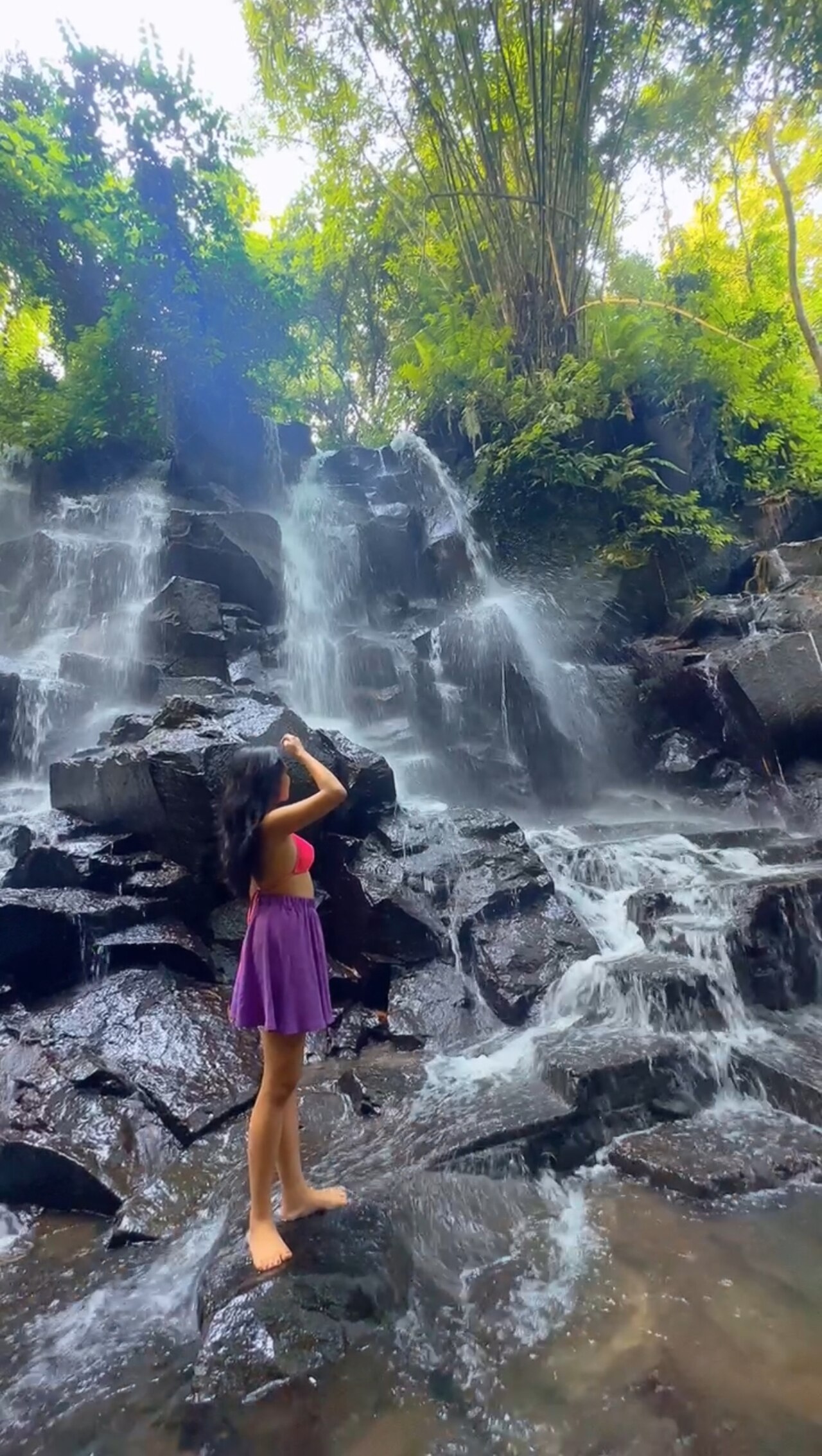
Photo: RienShin14 — CC BY 4.0, via source

The photogenic one, and about an hour from Denpasar. Fifteen metres of water fanning out across terraced rock into a shallow pool — the reason it appears in every Bali photo roundup.
The descent is steep but short: under 15 minutes from the entrance. Swimming allowed, changing facilities on site, a mossy riverbank and a cave across the water. This is the one to pick if you have half a day and no appetite for a staircase.
Taman Sari — Gianyar · short trek through rice fields
Down Jalan Ngenjung Sari in Bakbakan, and genuinely quiet. Three tiers with natural pools plus two terraced pools at different depths — good for actually getting in rather than just looking.
Within the site is Beji Taman Sari, a purification place held to be where celestial maidens bathed. The walk in crosses rice fields and countryside, which is half the appeal.
Melanting — Buleleng · short, well-maintained
In Munduk village, one of four waterfalls in that corner of Buleleng. About 20 metres into a clear pool that's good for swimming.
The trek is short and well kept, and it passes coffee and clove plantations, flower gardens, orange groves and rice fields — the walk is as much the attraction as the falls. Parking, restrooms and warungs on site. Mornings in dry season are quietest.
Before you go
Two practical things. Waterfall pools are cold and the rocks are slick — the health guide covers what actually matters medically in Bali, and it isn't what most people worry about. And several of these are 1.5–3 hours from the south coast on roads that map apps are optimistic about; the getting around guide has realistic times.
Sites like Blemantung and Taman Sari have shrines attached and are used for ritual, not just recreation. Miragi's narrated audio guides cover the story behind each one — what the temple is for, who Kebo Iwa was, why a particular spring is treated as sacred — playing while you're standing there. Over 200 sites across Bali.