The 9 Temples in Bali That Are Actually Worth Your Time
July 27, 2026 · Miragi Team
Bali is often said to have more temples than houses. Every family compound has its shrine, every village its three temples, every rice-field cooperative its own water shrine. Faced with that, the honest question is not "which temples should I see?" but "which ones are worth planning a day around?"
These nine are. Not because they photograph well — though several do — but because each one is a different answer to what a temple is for in Bali. One is a state sanctuary. One is a bathing spring where people still queue to be purified. One was carved into a cliff by an 11th-century king mourning his father.
Before you go: temples are working places of worship, not monuments. Sarong and sash are required, and there are rules that are easy to break by accident. Our temple etiquette guide covers what actually matters.
1. Pura Besakih — Karangasem
The largest and holiest temple in Balinese Hinduism, on the western slopes of Mount Agung. Tradition places its founding around 1284 by the sage Rsi Markandeya, and the name traces to the Sanskrit Wasuki — safety — and the mythology of the dragon Basuki.
What most visitors miss is that Besakih is not one temple. It is 21 of them, spread across 3.5 kilometres, arranged according to Tri Hita Karana and the cardinal directions of the Panca Dewata mandala, with Pura Penataran Agung at the centre. Walking it without knowing that structure is like walking a cathedral without knowing which end is the altar.
2. Pura Lempuyang — Karangasem
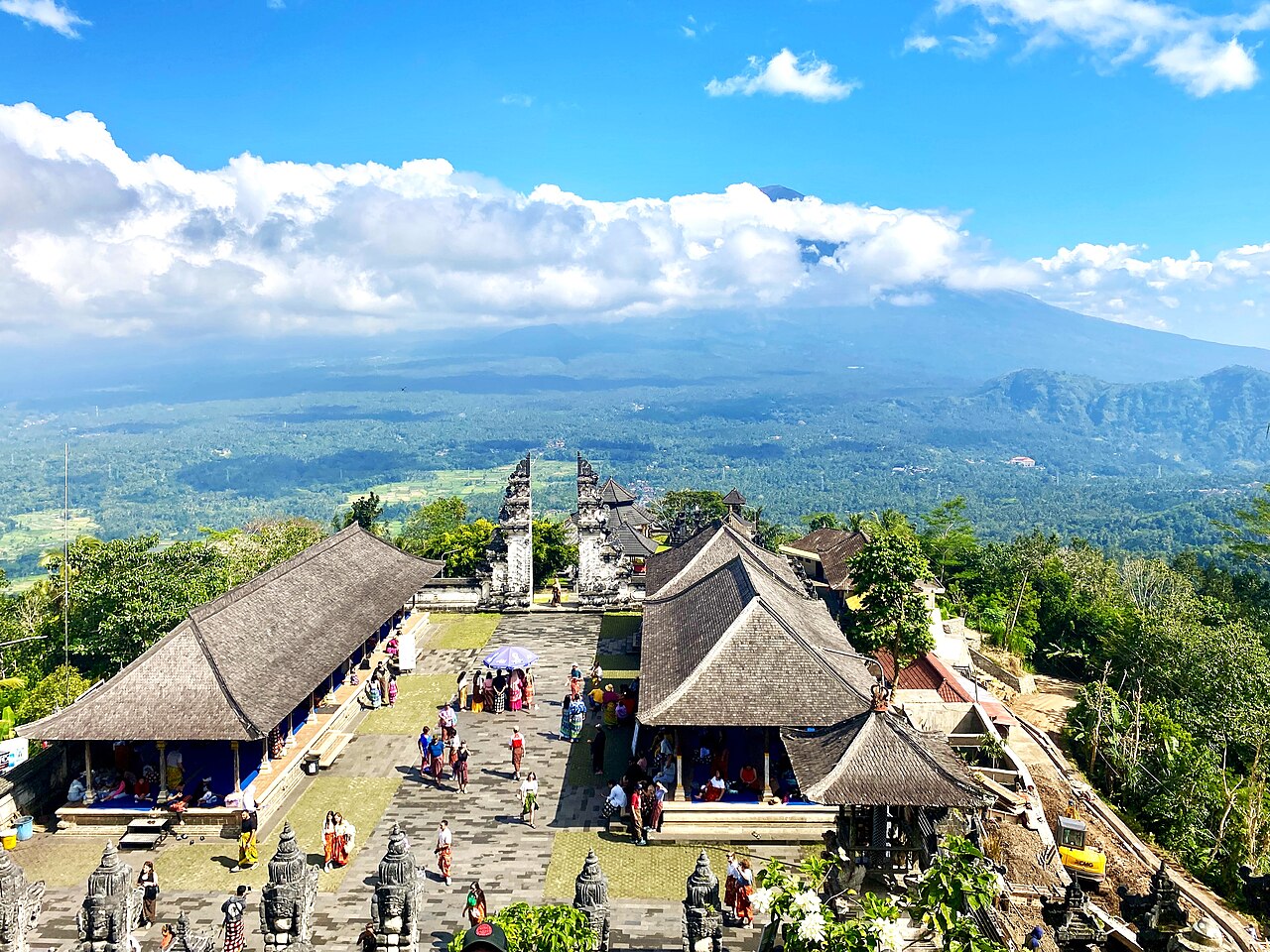
Photo: Slleong — CC0 1.0, via source

Believed to be older than Besakih, perched on Mount Lempuyang, and one of the Sad Kahyangan Jagat — the six holiest temples on the island.
You will know it from the split gate, the Candi Bentar, that frames Mount Agung so precisely it looks staged. It has become one of the most photographed spots in Indonesia. What the photographs leave out is that this is a pilgrimage site of the first rank, and the gate is the entrance to somewhere, not a backdrop.
3. Pura Tirta Empul — Gianyar
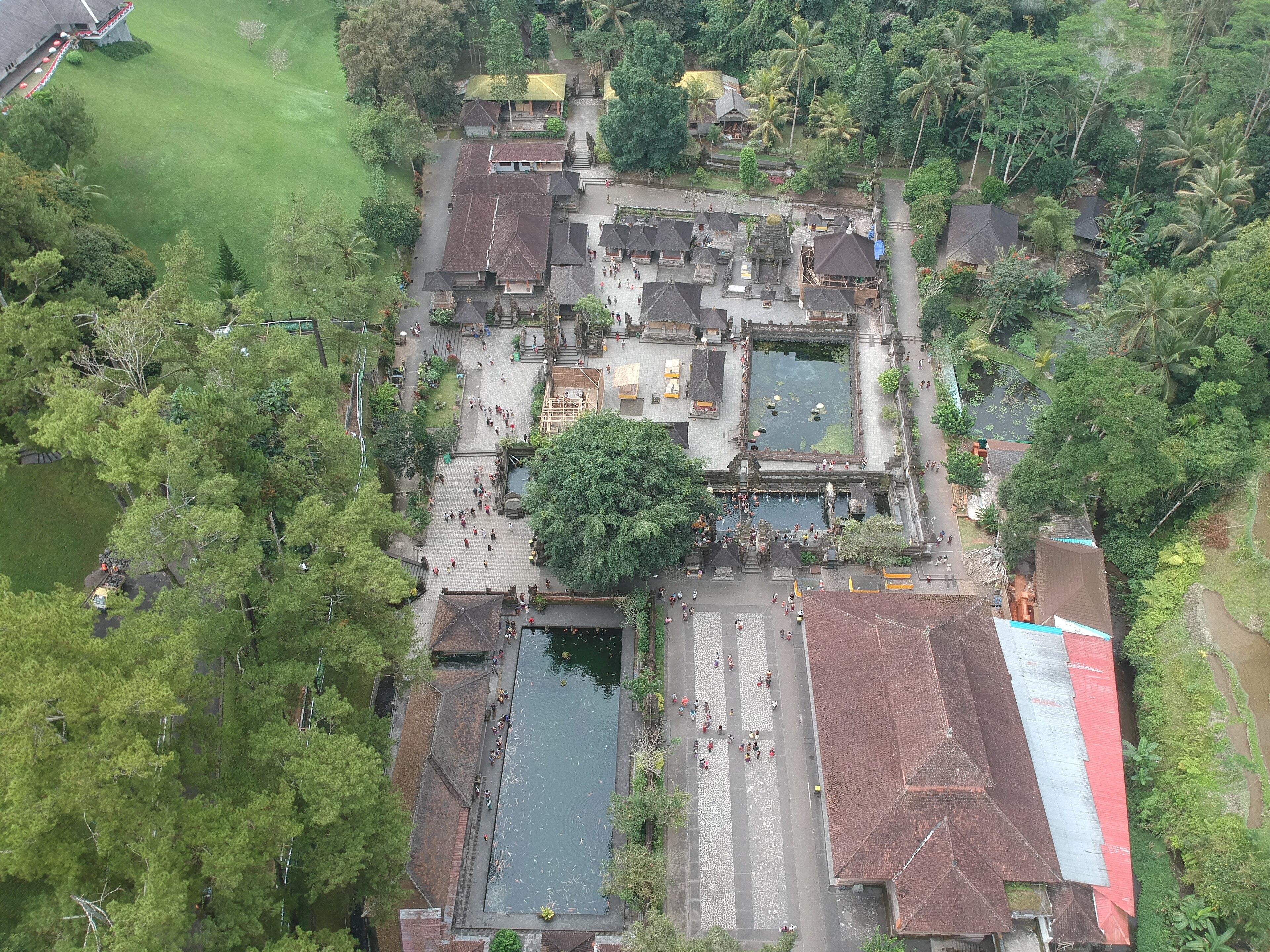
Photo: Magul — CC BY-SA 4.0, via source
.jpg)
In Manukaya village, Tampaksiring, about 42 km from Denpasar. Its spring feeds a bathing complex where Balinese Hindus perform Melukat, a purification ritual — the water is regarded as amritha, the water of immortality.
The Usana Bali manuscript ties the site to the battle between the tyrant king Mayadenawa and the god Bhatara Indra. The spring's name means "holy water that bubbles from the earth," and the temple was built in Indra's honour. It is very much in active use; if you enter the pools, you are joining a ritual, not a swimming pool.
4. Pura Uluwatu — Badung
On a 70-metre cliff above the sea in Pecatu, South Kuta, dedicated to Shiva Rudra. Three main courtyards, surrounded by forest, and a resident monkey population believed to guard the place — they will also relieve you of sunglasses, so keep them stowed.
Most people come for the Kecak performance at sunset, and it earns the crowd. Arrive earlier than you think you need to.
5. Pura Taman Ayun — Badung
In Mengwi, and a UNESCO World Heritage site. Tiered meru towers set in water so that the whole complex appears to float.
It was the state temple of the Mengwi royal family, built to honour their ancestors, and it deliberately incorporates symbols from Bali's nine principal temples — a royal house making a claim about its place in the island's spiritual order. Open 8:00 AM to 6:00 PM WITA; ceremonies fall on Tuesday Kliwon of wuku Medangsia.
6. Candi Tebing Gunung Kawi — Gianyar
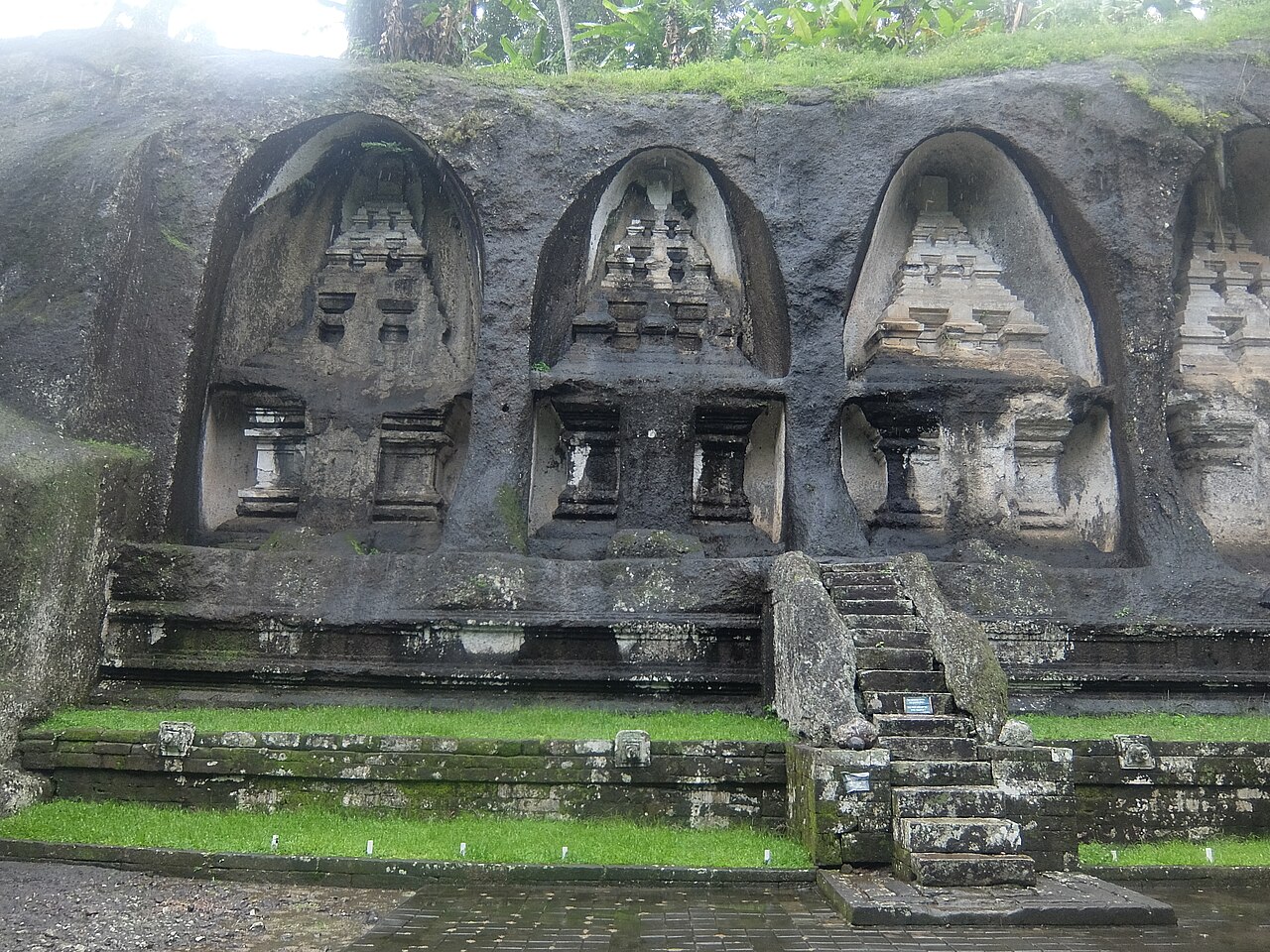
Photo: Karinkeren — CC BY-SA 4.0, via source

An 11th-century complex in Tampaksiring, carved directly into the cliff face above the Pakerisan river during the Warmadewa dynasty. King Marakata built it to honour the spirit of his father, King Udayana.
Ten shrines across three locations — five on the east bank, the rest to the west — with hermitages nearby that show Hindu and Buddhist practice sitting side by side. It is still in active use. Of everything on this list, this is the one that most rewards arriving early and quiet.
7. Pura Goa Lawah — Klungkung
A Kahyangan Jagat temple in Pesinggahan, Dawan, built in the 11th century by Mpu Kuturan and built around a sacred cave inhabited by thousands of bats.
Its role is specific: Goa Lawah is central to the Nyegara Gunung ceremony, which completes the cycle between sea and mountain in Balinese funerary practice. Its piodalan falls on Anggara Kasih Medangsia, every 210 days on the Balinese calendar — which the Balinese calendar guide explains if the arithmetic looks strange.
8. Pura Ulun Danu Batur — Bangli
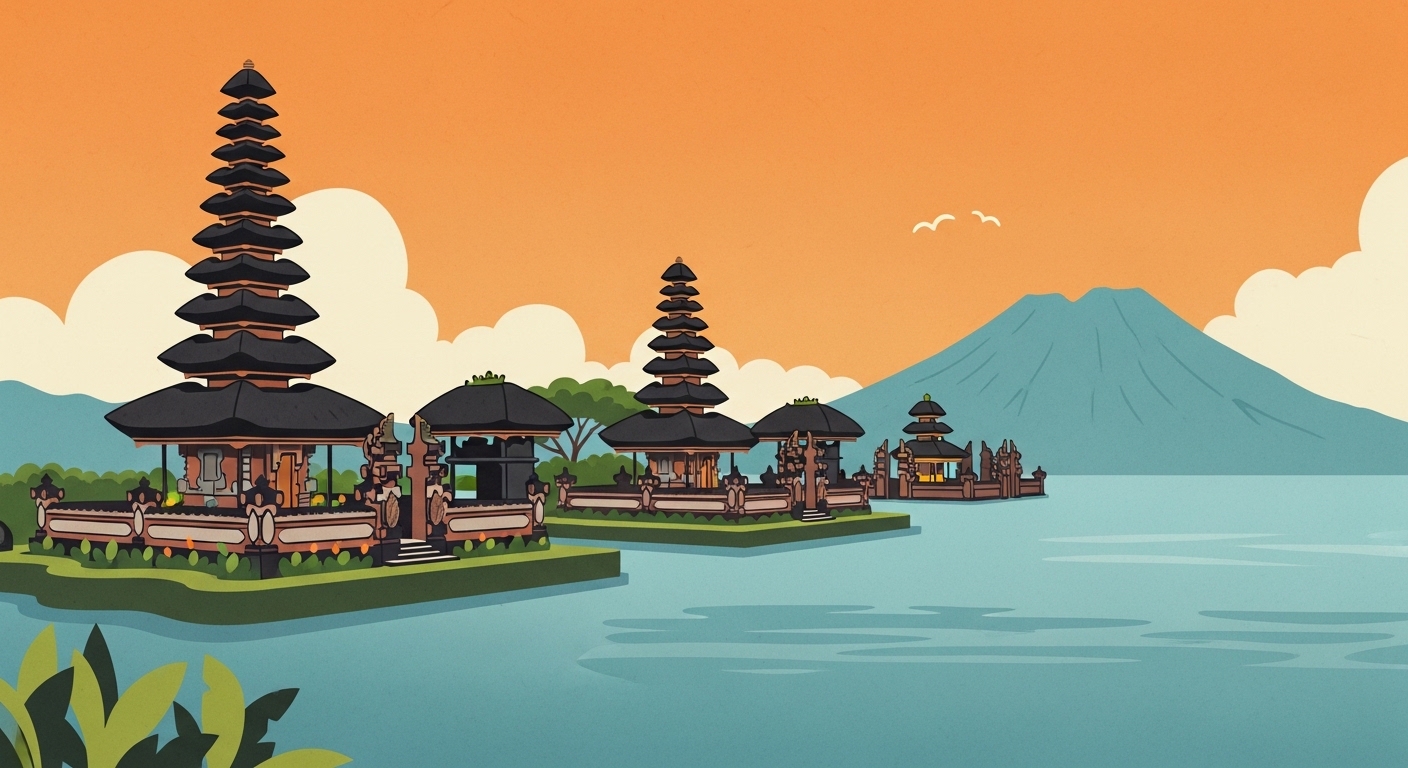
Illustration: Miragi
At the foot of Mount Batur, dedicated to Vishnu and Dewi Danu, goddess of the lake. Built in the 17th century, devastated by the eruptions of 1917 and 1926 — but key structures, including the eleven-tiered meru tumpang solas, survived and were moved to Batur Kintamani.
It also contains a Buddhist temple, a legacy of Balinese-Chinese cultural assimilation. The annual Ngusaba Kedasa ceremony gives thanks for safety, which on the slopes of an active volcano is not an abstraction.
9. Pura Luhur Batukaru — Tabanan
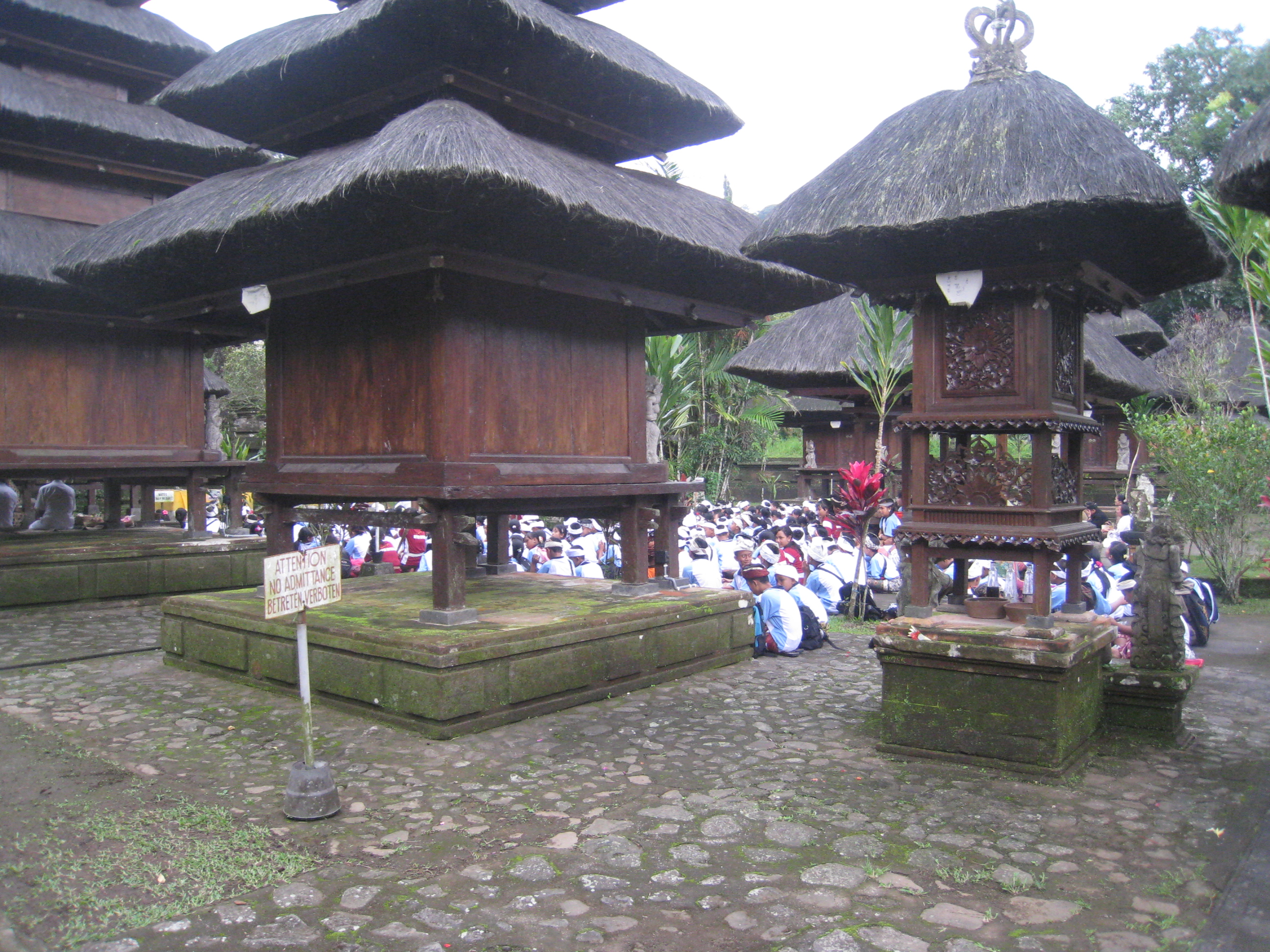
Photo: MajaK. — CC BY 3.0, via source

On the southern slopes of Mount Batukaru, founded by Mpu Kuturan in the 11th century and dedicated to Mahadewa in the form of Ratu Hyang Tumuwuh — deity of plant growth and pure water.
It is the quietest temple on this list, in wet forest, with none of Uluwatu's crowds. Ceremonies run every Thursday during wuku Dungulan. Dress properly and follow local lead; this is a working temple with few visitors and correspondingly little tolerance for being treated as scenery.
Making sense of what you're seeing
The gap between "beautiful temple" and "I understand why this matters" is mostly information — which deity, which dynasty, which ceremony, why the gate faces that way.
That is what Miragi is for. Each of these temples has a narrated audio guide in the app, playing as you walk, so the history arrives while you're standing in it rather than afterwards on your phone. Over 200 sites across Bali are covered the same way.
If you want the background before you go, the Kahyangan Tiga guide explains the three-temple system every Balinese village is built around — the structure underneath almost everything on this list.